Relational leadership: the missing piece in your management toolkit
You're already a capable manager. RLM helps you become the kind of leader people trust, follow, and stay for, especially when conversations are hard.
What Makes RLM Different
Most leadership development teaches you what to do. The Relational Leadership Method teaches you how to relate. That's where trust is built, hard conversations get easier, and your influence as a leader becomes real.
The Relational Leadership Method
A complete system for how you lead people — in the moments that actually count.
The RLM isn't a framework you learn once and reference occasionally. It's a practice. Built around the real situations managers face every day - the conversation that needs to happen, the behaviour that keeps recurring, the decision you have to make under pressure with half the information you'd like.
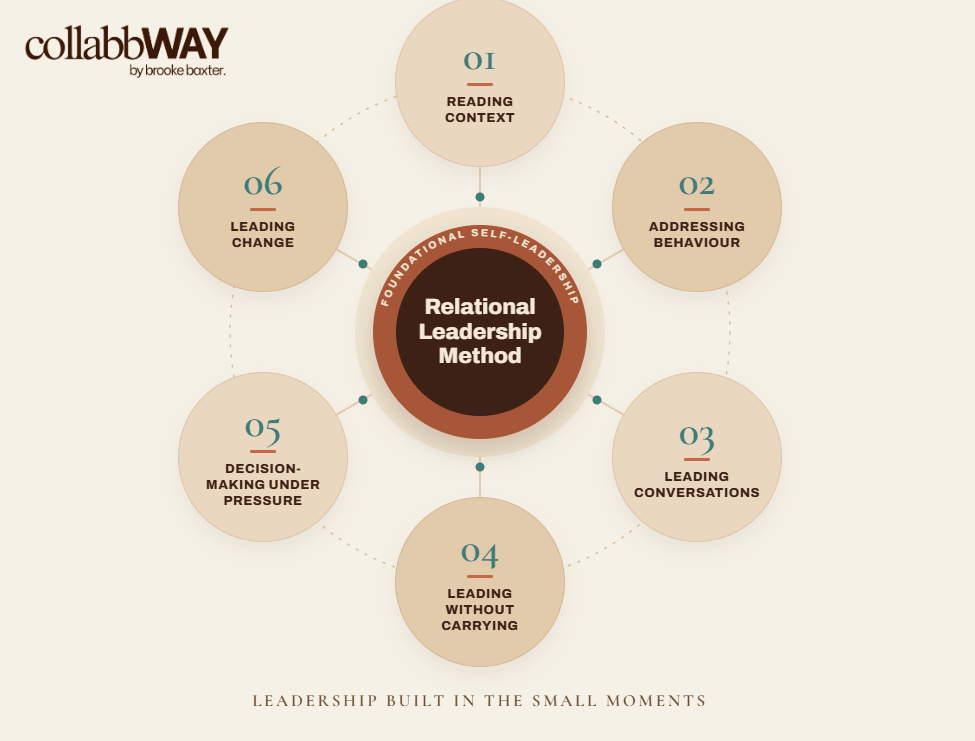
It's made up of 30 practice guides across a Foundational Base and Six Lenses. Each one is practical, specific, and designed to be used in the room — not just understood in theory.
Lens 1 · Reading Context
Effective leadership begins with understanding people — not just what they deliver, but what is driving them. This lens helps leaders read beneath the surface of behaviour, build trust in everyday moments and create the safety people need to do their best work.
Lens 2 · Addressing Behaviour
Clear expectations and honest conversations are the foundation of a high-performing team. This lens equips leaders to address behaviour early, set standards with clarity and hold accountability — without losing the relationship in the process.
Lens 3 · Leading Conversations
The quality of a leader's conversations is the quality of their leadership. This lens develops the skills to start difficult conversations directly, stay present when they get uncomfortable, and hold connection and clarity at the same time.
Lens 4 · Leading Without Carrying
Many leaders over-function — solving problems that belong to others, carrying the team's emotional load, stepping in when they should step back. This lens builds the skills to shift ownership, grow independent thinking and build genuine accountability across the team.
Lens 5 · Decision-Making Under Pressure
Leadership is tested most when pressure is highest. This lens strengthens a leader's ability to regulate before reacting, think clearly in the noise and hold their standards even when they are being tested. When leaders are steady, teams feel safer.
Lens 6 · Leading Change
Change is both emotional and practical. This lens equips leaders to read how people are actually responding to change, communicate with honesty even when not everything is known, and embed new ways of working without overwhelming the people they lead.
Foundational Base — Self-Leadership
Before you can lead others, you need to lead yourself. The Foundational Base covers the four practices every leader needs as their base: leading from your values, owning your authority, managing self-doubt, and holding sustainable boundaries.
4 Foundational practices.
26 skills across Six Lenses.
30 guides you can reach for when the moment arrives.
Explore the Full RLM Online Module →